Publications of Interest (selected by Huan Giap)
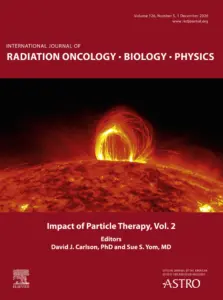
The international Journal of Radiation Oncology – Biology – Physics (“The Red Journal”) recent publication (Volume 126, Issue 5, December 1, 2026) serves as a comprehensive special collection on particle therapy—spanning protons, carbon ions, alpha particles, and boron neutron capture therapy (BNCT). Across 44 articles, the issue charts how the field is moving beyond basic physical dose sparing toward biologically guided, ultra-fast, and image-adaptive treatments. These articles can be download at free.
1. Strategic & Clinical Framing
- Foundational Perspectives & Podcast: Editor-in-Chief Sue Yom and David J. Carlson introduce a systems-thinking approach in “Machines and Mechanisms”, accompanied by a featured podcast with Joel Tepper, Harald Paganetti, and David Sher on the history, biological modeling, and clinical value of proton therapy.
- The Value & Immune Debate: Articles trace the early history of fractionated protons, explore how to conceptualize clinical value, standardize patient-reported outcomes via SISAQOL-IMI, and debate whether particle therapy’s primary immunological advantage lies in preserving circulating lymphocytes or inducing particle-specific antitumor biology.
- Gray Zone — Sacral Chordomas: A case presentation and four expert opinions debate multimodal strategies for sacral and sacrococcygeal chordomas, weighing neodefinitive hypofractionated dose-painting, conventional treatment paradigms, tailored surgery plus proton therapy, and neoadjuvant SBRT (“beam before blade”).
2. Proton Delivery & Real-Time Image Guidance
- Next-Generation Delivery: Studies examine 10-year utilization trends for compact pencil beam scanning, upright patient immobilization, LET-optimized proton arc lattice therapy, and special medical physics consultations for reirradiation.
- Advanced Imaging & Adaptation: Technical breakthroughs aim to shrink range uncertainty and enable daily plan adaptation, including hardware-based scatter suppression in proton CBCT, a gantry-mounted photon-counting detector CT prototype, cable-free thermoacoustic range verification, a Phase 1 trial of Online Proton Adaptive RadioTherapY (PARTY) supported by an in-room CT-on-rails workflow, and beam deflection compensation for MR-integrated proton therapy.
3. Biophysical Modeling, RBE & Radiobiology
- Microdosimetry & Variable RBE: Moving away from a constant 1.1 RBE factor, contributors present the Mayo Clinic Florida Microdosimetric Kinetic Model, microdosimetric modeling for proton minibeams, a unified RBE framework, track-structure Monte Carlo RBE reanalysis, dose-dependent LET constraints, and causal machine learning analysis of mandible osteoradionecrosis.
- Cellular & Systemic Biology: Preclinical and translational studies quantify tumor hypoxia effects, identify homologous recombination and alternative end-joining as key determinants of proton radiosensitivity, show metabolic and synaptic remodeling from proton minibeams in glioblastoma, and evaluate patient-specific modeling alongside clinical lymphocyte data for lymphopenia sparing.
4. Ultra-High Dose Rate (FLASH) Radiotherapy
- Clinical Feasibility: Physics papers investigate split-dose multifield FLASH delivery and optimize transmission FLASH for large-field postmastectomy breast cancer.
- Normal Tissue Protection: Biological studies demonstrate that proton FLASH preserves ocular structure and function as well as musculoskeletal and bone marrow integrity in juvenile mice, while atomic force microscopy probes FLASH-induced DNA double-strand breaks.
5. Heavy Ions, Alpha Particles & BNCT
- Alpha Radiopharmaceuticals: An editorial calls for converging radiopharmaceutical therapy with radiation oncology, supported by a benchtop Americium-241 alpha irradiator, comparisons of alpha vs. beta-minus DNA damage, and tumor-to-kidney dosimetry modeling for alpha PRRTs.
- BNCT: A clinical investigation demonstrates that PET-guided modeling of mucosal boron heterogeneity improves toxicity prediction.
- Carbon Ion Therapy: Closing the issue, authors outline Mayo Clinic’s strategy to re-establish carbon ion therapy in the U.S., establish international consensus statements on clinical RBE, analyze outcomes and metabolic responses in locally advanced pancreatic cancer, and report clinical gantry raster-scanning experience from Heidelberg.