Celebrating Three Years of Proton Therapy at NCCS: From Vision to Clinical Excellence
By Sung Yong Park, Tan Jia Min, John Teoh, Soong Yoke Lim, and Michael Wang
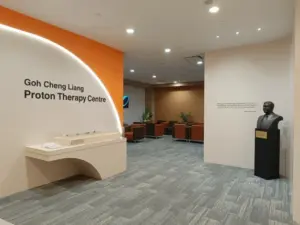
The Proton Therapy Programme at Goh Cheng Liang Proton Therapy Centre, National Cancer Centre Singapore (NCCS) marks three years of clinical operations in June 2026. This is an important milestone that reflects not only the growth of the facility, but what began as an ambitious vision to bring world-class proton therapy to Singapore has evolved into a leading regional programme delivering cutting-edge cancer care, advancing research, and contributing to global proton therapy development.
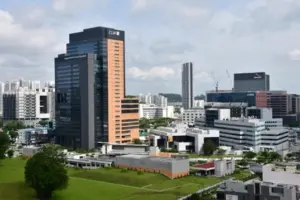
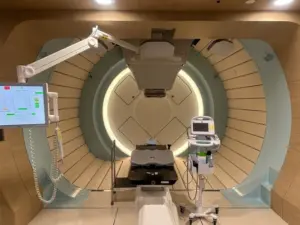
The programme is housed within the Goh Cheng Liang Proton Therapy Centre, which is equipped with the Hitachi PROBEAT proton therapy system. The facility features four full-rotating gantry treatment rooms capable of delivering highly precise pencil beam scanning proton therapy, as well as a dedicated fixed-beam room designed for research, technology development, and radiation testing applications. This combination of clinical and research capabilities positions NCCS as one of the few centres in the region able to support both advanced patient treatments and proton-related scientific innovation under one roof.
Building the Foundation
The implementation of the Goh Cheng Liang Proton Therapy Centre was a complex undertaking that required close coordination among NCCS, project consultants, Communications & Security teams, and the Proton Beam Therapy (PBT) vendor. Extensive planning was necessary to ensure that construction activities, access requirements, and specialised installation works would not compromise the highly sensitive proton therapy equipment.
The team also proactively monitored and managed water seepage issues within proton treatment areas to protect critical equipment and maintain project timelines.
Like many major healthcare projects worldwide, the team faced several unexpected challenges, including the COVID-19 pandemic, which required proactive monitoring and actions to protect critical equipment and maintain project timelines.
Construction activities were halted during the circuit breaker period, while travel restrictions affected vendor support for equipment installation, testing, and commissioning. NCCS worked closely with the vendor to develop a revised implementation schedule, including co-sharing quarantine-related costs and strengthening inspection processes to safeguard equipment integrity.
The phased completion of Testing and Commissioning (T&C) was achieved as follows:
- Gantry 1: 15 September 2022
- Gantry 2: 30 December 2022
- Gantry 3: 30 April 2023
- Gantry 4: 31 August 2023
- Fixed Beam Room: 31 December 2023
Preparing for Clinical Operations
To support advanced proton therapy delivery, NCCS adopted the RaySearch Treatment Planning System (TPS), becoming one of the early centres to implement a planning platform capable of supporting Hitachi’s Dose Driven Continuous Scanning (DDCS) technology. This strategic decision positioned the centre to leverage future treatment delivery innovations aimed at improving efficiency and patient experience.
Preparation for clinical operations extended beyond technology. A comprehensive workforce development programme was established to identify manpower requirements and equip staff with specialised proton therapy expertise through overseas training attachments at established proton centres worldwide.
The programme successfully underwent the Ministry of Health (MOH) Proton Beam Therapy Licensing Audit from 22 to 24 March 2023. Through close collaboration across multiple departments, NCCS met all regulatory requirements and received MOH licensing approval on 29 May 2023, followed by pricing approval on 7 June 2023. Clinical and administrative workflows, including financial counselling processes, were also refined to facilitate patient-centred discussions when comparing proton and conventional photon treatment options.
Clinical Growth and Innovation
The first proton therapy patient was treated on 27 June 2023, marking the start of a new era in cancer treatment at NCCS.
Since then, the programme has achieved several significant milestones:
- First proton therapy patient treated: 27 June 2023
- First paediatric proton therapy patient treated: 31 July 2023
- First Respiratory-Gated Proton Therapy (RGPT) treatment conducted: 29 September 2023
Proton beam therapy in Singapore operates under strict regulatory oversight by the Ministry of Health (MOH), with 33 approved indications currently. All cases must be presented at a multidisciplinary tumour board, to ensures rigorous case selection and peer oversight. Despite these restrictions, patient numbers have grown rapidly, with more than 750 patients having undergone proton therapy treatment at NCCS to date.
The largest group in the proton programme currently is prostate cancer, accounting for 30% of the total caseload, followed closely by nasopharyngeal cancer at 28%. Together, these two cancer types represent well over half of all proton treatments delivered at the centre. Head and neck cancers excluding NPC form the third largest group at 15%, underscoring the particular clinical relevance of proton therapy in this anatomically complex region. CNS and brain cancers account for 51 patients 7%, while paediatric cancers and thoracic malignancies each represent 5% of the caseload. The remaining patients are distributed across breast cancer, oesophageal cancer, sarcoma, and other gastrointestinal cancers.
A cornerstone of the NCCS proton therapy programme is its commitment to prospective, systematic outcomes tracking through a dedicated registry that predates the opening of the proton centre itself and reflecting the programme’s long-term vision for evidence generation. All patients undergoing proton beam therapy at NCCS are enrolled into this outcomes study, which captures patient-reported outcome measures (PROMs), physician-rated acute and late toxicities, and survival and recurrence data across the full spectrum of cancer types treated.
This registry has already generated meaningful early data which were presented at PTCOG 64. One example is the propensity score-matched comparison of 53 NPC patients treated with IMPT against 53 matched patients treated with VMAT, drawing on the broader photon registry cohort of 337 patients treated between 2017 and 2024. This analysis demonstrated equivalent one-year disease control outcomes between the two modalities, while revealing substantially lower rates of Grade ≥2 xerostomia (28.3% vs 75%), dysgeusia (30.4% vs 96.4%), dysphagia (19.6% vs 78.5%), and pharyngolaryngeal pain (4.3% vs 42.8%) with IMPT. Dosimetrically, mean doses to the pharyngeal constrictors and oral cavity were significantly lower with IMPT across all subregions (p<0.001), and patients treated with IMPT demonstrated less weight loss throughout the treatment course.
The registry infrastructure positions NCCS to fulfil its reporting obligations to MOH while simultaneously contributing to the international evidence base for proton therapy. As follow-up matures, the programme will be well placed to determine whether the clear dosimetric and acute toxicity advantages of IMPT translate into sustained improvements in long-term quality of life and late toxicity outcomes — the questions that will ultimately define the clinical value of proton therapy for patients in Singapore and beyond.
Advancing Physics and Technology
The proton physics team continues to drive innovation and clinical excellence through technology development, commissioning activities, and research.
A major recent achievement was the successful completion of FLASH proton therapy testing on 5 March 2025, positioning NCCS among a select group of centres globally exploring the potential of ultra-high dose rate radiation delivery.
The implementation of Dose Driven Continuous Scanning (DDCS) represents another significant advancement. DDCS is expected to reduce beam delivery times by approximately 35%, improving treatment efficiency and potentially enhancing patient comfort. Clinical deployment is targeted for 2026 following comprehensive validation and commissioning activities.
In the last five years, the medical physics team has also contributed extensively through over 38 scientific publications, 44 conference presentations, and 7 collaborative research projects, further strengthening NCCS’ role as a regional leader in proton therapy innovation.
Global Leadership and Academic Contributions
NCCS has established strong academic and clinical partnerships with leading proton therapy centres worldwide. Through collaborations with institutions such as the University of Pennsylvania (UPenn) and other international partners, NCCS has developed educational programmes, fellowships, and knowledge exchange initiatives that support professional development and foster international collaboration.
The centre also provides consultancy services for emerging proton therapy programmes, including support for new proton therapy providers such as Yas Healthcare LLC, sharing expertise gained from the successful implementation and operation of Singapore’s first comprehensive proton therapy facility.
A significant highlight was NCCS’ successful bid to host Particle Therapy Co-Operative Group (PTCOG) 62, the premier international conference in particle therapy. Held at Suntec Singapore Convention & Exhibition Centre from 10–15 June 2024, PTCOG 62 achieved a record participation for a PTCOG meeting hosted in Asia. More than 300 international delegates attended facility tours at NCCS, showcasing Singapore’s achievements and capabilities in proton therapy.

Beyond Clinical Care
The NCCS proton facility has also expanded its impact beyond patient treatment. The Fixed Beam Room has supported proton irradiation and testing services for external organisations, including DSO National Laboratories.
Building on these capabilities, NCCS is actively exploring opportunities to support proton radiation testing for the growing aerospace and space technology sectors, leveraging its unique infrastructure to contribute to innovation beyond healthcare.
Looking Ahead
In just three years of clinical operation, the NCCS Proton Therapy Programme has established itself as a leader in proton therapy across the region. Through the dedication of multidisciplinary teams, continued investment in technology and training, and a strong commitment to research and collaboration, NCCS continues to push the boundaries of precision radiation oncology.
As the programme enters its next phase of growth—with emerging technologies such as FLASH therapy, DDCS implementation, expanding research activities, and increasing international collaborations—it remains focused on its mission to deliver the best possible outcomes for patients while advancing the future of proton therapy in Singapore and beyond.